

UPCOMING EVENTS
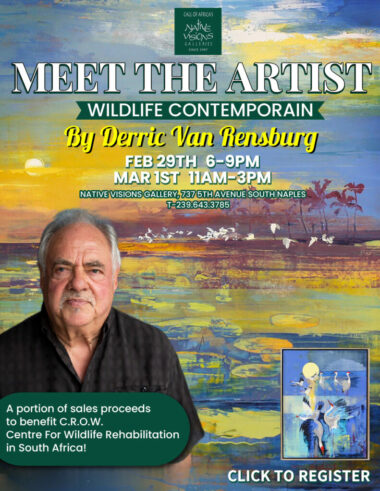
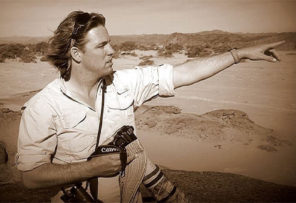
Wildlife Contemporain – Meet The Artist – Derric Van Rensburg – Naples
Thursday 6pm – 9pm
Friday 11am – 3pm
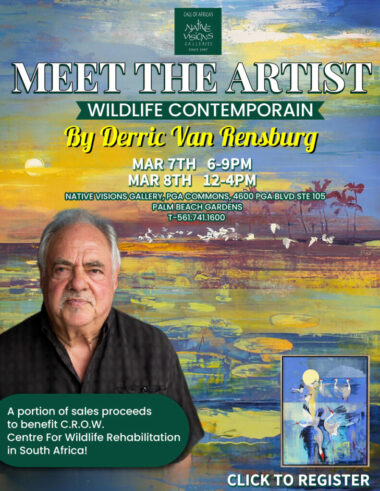
Wildlife Contemporain – Meet The Artist – Derric Van Rensburg – PBG Gallery
Thursday 6pm – 9pm
Friday 12-4pm
Art Gallery in Naples & Palm Beach Gardens Florida
FEATURING THE FINEST WILDLIFE AND NATURE ARTISTS IN THE WORLD!
SINCE 1987
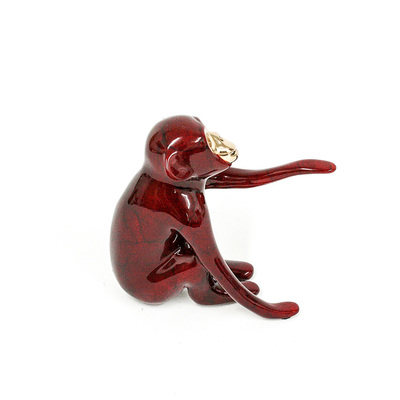
![Loet Vanderveen - CHIMP, BABY (521) - BRONZE - 4 X 2 X 3 - Free Shipping Anywhere In The USA!
<br>
<br>These sculptures are bronze limited editions.
<br>
<br><a href="/[sculpture]/[available]-[patina]-[swatches]/">More than 30 patinas are available</a>. Available patinas are indicated as IN STOCK. Loet Vanderveen limited editions are always in strong demand and our stocked inventory sells quickly. Special orders are not being taken at this time.
<br>
<br>Allow a few weeks for your sculptures to arrive as each one is thoroughly prepared and packed in our warehouse. This includes fully customized crating and boxing for each piece. Your patience is appreciated during this process as we strive to ensure that your new artwork safely arrives.](/Art_Images/Small/TNLV00521.jpg "Loet Vanderveen-CHIMP, BABY (521)")
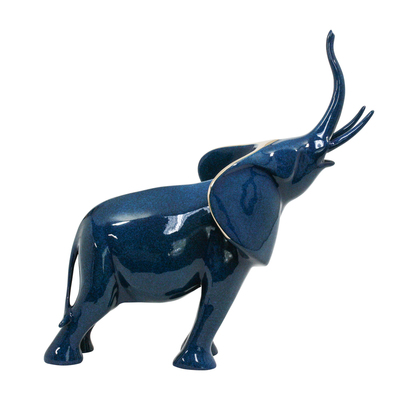
![Loet Vanderveen - ELEPHANT, ASIAN (497) - BRONZE - 11 X 5 X 12 - Free Shipping Anywhere In The USA!
<br>
<br>These sculptures are bronze limited editions.
<br>
<br><a href="/[sculpture]/[available]-[patina]-[swatches]/">More than 30 patinas are available</a>. Available patinas are indicated as IN STOCK. Loet Vanderveen limited editions are always in strong demand and our stocked inventory sells quickly. Special orders are not being taken at this time.
<br>
<br>Allow a few weeks for your sculptures to arrive as each one is thoroughly prepared and packed in our warehouse. This includes fully customized crating and boxing for each piece. Your patience is appreciated during this process as we strive to ensure that your new artwork safely arrives.](/Art_Images/Small/TNLV00497.jpg "Loet Vanderveen-ELEPHANT, ASIAN (497)")
![Loet Vanderveen - BUSHBUCK, CLASSIC (326) - BRONZE - 5 X 3.5 - Free Shipping Anywhere In The USA!
<br>
<br>These sculptures are bronze limited editions.
<br>
<br><a href="/[sculpture]/[available]-[patina]-[swatches]/">More than 30 patinas are available</a>. Available patinas are indicated as IN STOCK. Loet Vanderveen limited editions are always in strong demand and our stocked inventory sells quickly. Special orders are not being taken at this time.
<br>
<br>Allow a few weeks for your sculptures to arrive as each one is thoroughly prepared and packed in our warehouse. This includes fully customized crating and boxing for each piece. Your patience is appreciated during this process as we strive to ensure that your new artwork safely arrives.](/Art_Images/Small/TNLV00326.jpg "Loet Vanderveen-BUSHBUCK, CLASSIC (326)")
![Loet Vanderveen - CHEETAH, SM SEATED #1 HEAD UP (309) - BRONZE - 14 X 8 X 14 - Free Shipping Anywhere In The USA!
<br>
<br>These sculptures are bronze limited editions.
<br>
<br><a href="/[sculpture]/[available]-[patina]-[swatches]/">More than 30 patinas are available</a>. Available patinas are indicated as IN STOCK. Loet Vanderveen limited editions are always in strong demand and our stocked inventory sells quickly. Special orders are not being taken at this time.
<br>
<br>Allow a few weeks for your sculptures to arrive as each one is thoroughly prepared and packed in our warehouse. This includes fully customized crating and boxing for each piece. Your patience is appreciated during this process as we strive to ensure that your new artwork safely arrives.](/Art_Images/Small/TNLV00309.jpg "Loet Vanderveen-CHEETAH, SM SEATED #1 HEAD UP (309)")





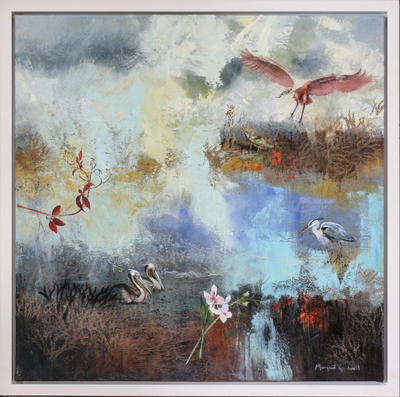

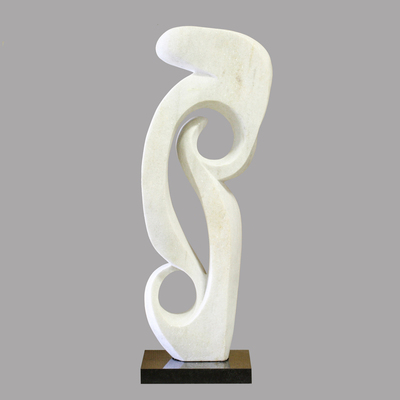

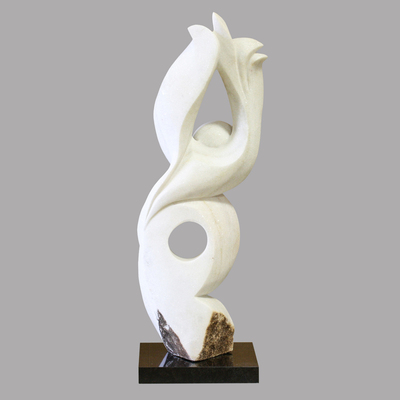

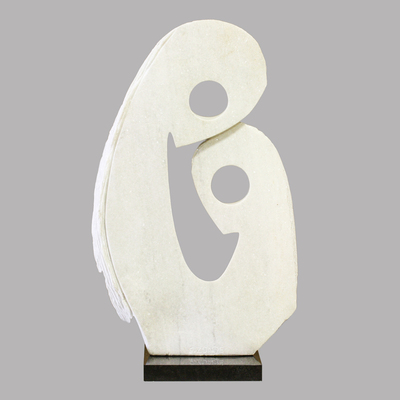

VIEW ARTWORK
RECENT PRESS & NEWS
UPCOMING EVENTS
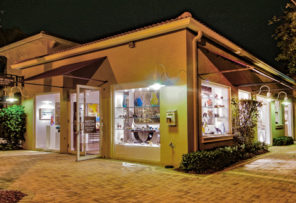
NEW DAVID LANGMEAD BOOK

Our exclusive art galleries feature paintings and sculpture by some of the world’s most celebrated artists.
Since 1987 our Naples art gallery, located in 5th Avenue South of Downtown Naples, known around the world as the avenue of the arts. In 5th avenue south visitors can shop, dine and visit museums throughout the day and late into the evening any given day of the week.
Our second art gallery is located in the popular PGA Commons Art & Dining District of Palm Beach Gardens. This exclusive arts and dining district also offers visitors an upscale shopping, art and dining experience.
Both of our locations offer a comprehensive collection of traditional and contemporary fine art collection including breathtaking African wildlife and landscapes, dramatic Everglades scenes, powerful seascapes, historic safari scenes as well as amazing floral and still-life’s. Various mediums used include oil, pastel, watercolor, acrylic, stone, wood, bronze, rare verdite, murano and cast glass.
Many of our artists’ works have been featured on the covers of both Sotheby’s and Christie’s auction catalogues and several have had their work selected by national museums around the world including the Royal Academy of Portraiture Art in London.
Our highly talented artists have exhibited in numerous shows including Safari Club International, Dallas Safari Club, Leigh Yawkey Museum – National Birds In Art Exhibit, Artists International Plein Aire Society and Society of Animal Artists to name a few.
Stop by our Naples or Palm Beach Gardens Gallery for an exotic wildlife art experience that is sure to impress!
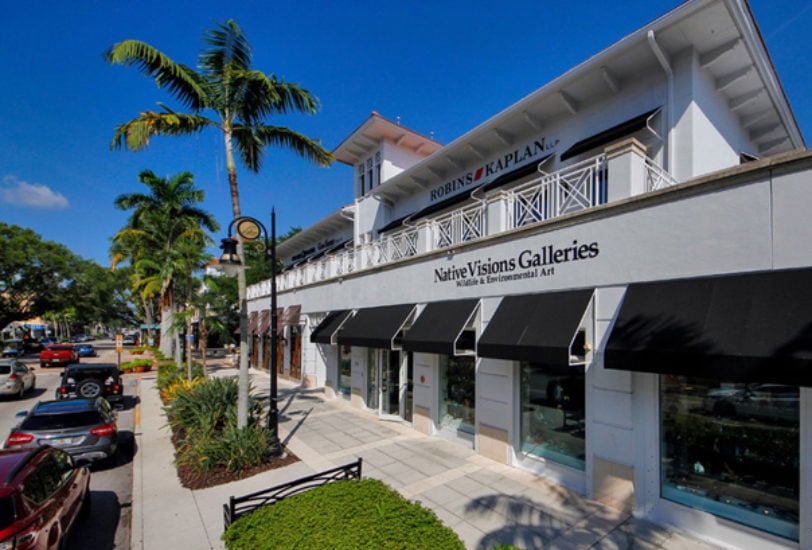
737 5th Ave S
Naples, Fl 34102
Map / Directions
(p) 239.643.3785 (f) 239.643.5346
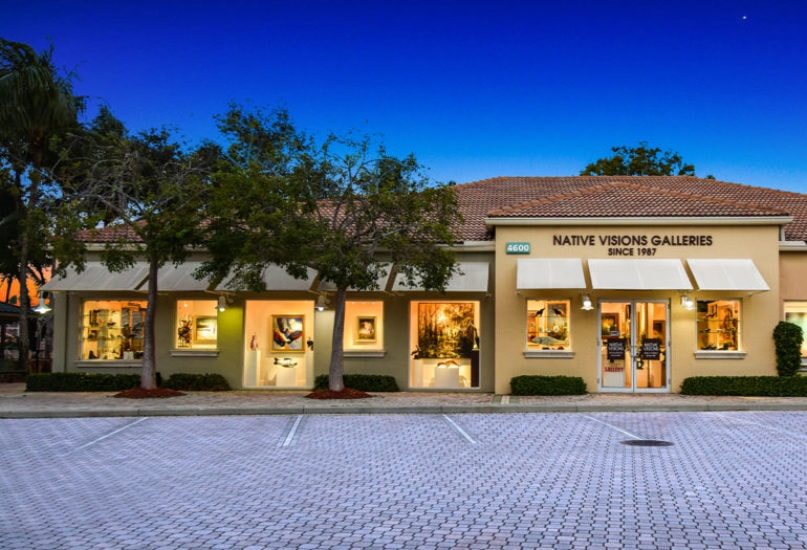
PGA Commons
4600 PGA Boulevard Suite #105
Palm Beach Gardens, FL 33418
Map / Directions
(p) 561.741.1600 (f) 561.566.6694
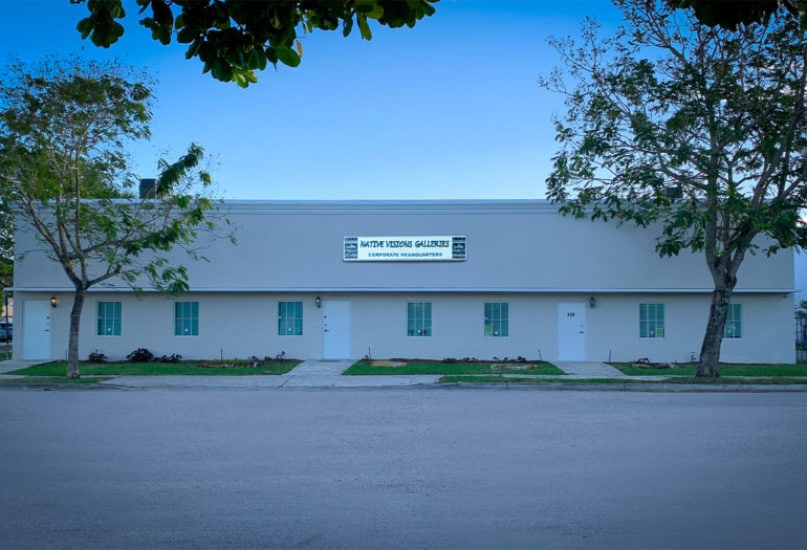
NATIVE VISIONS GALLERIES – HEADQUARTERS
920 N.E. 13th Street
Fort Lauderdale, FL 33304
Map / Directions
(p) 954-767-8737 (f) 954-524-7494